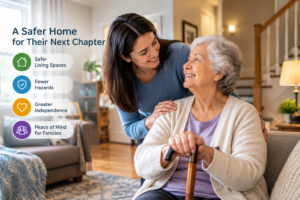
Imagine an older parent getting ready for breakfast. The morning feels normal until they reach for something on a high shelf, step around a loose rug, or walk into a dim hallway. None of these moments may seem serious on their own. But small risks can become bigger problems when balance, strength, vision, or mobility change with age.
That is why senior safety at home is about more than removing a few hazards. It is about creating daily routines that make ordinary activities safer while helping older adults keep the independence they value.
Professional caregivers can play an important role in this process. They provide practical support, notice potential problems, and help seniors manage everyday activities with greater confidence.
Key Takeaways
- Professional caregivers can identify everyday safety risks before they become serious problems.
- Support with mobility, bathing, meals, and housekeeping can make daily routines safer.
- Good care should support independence rather than take it away.
- Families can use simple routines to create a safer and more comfortable home.
What Does Senior Safety at Home Mean?
Senior safety at home means reducing avoidable risks while helping an older adult move through daily life as independently as possible.
It can include safer walking areas, better lighting, support with personal care, organized living spaces, and help with activities that have become difficult.
The goal is not to turn a home into a medical setting. A safe home should still feel like home.
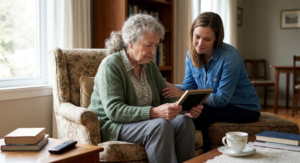
Professional caregivers for seniors can help by paying attention to how a person moves, where they struggle, and which everyday tasks require extra support.
According to the CDC, more than one in four adults age 65 and older report falling each year. Falls are also the leading cause of injury among older adults.
How Professional Caregivers Improve Senior Safety at Home
1. They Help Reduce Fall Risks
Falls can happen during simple activities such as getting out of bed, walking to the bathroom, or reaching for an item.
A caregiver may notice a walkway blocked by furniture, a loose mat, poor lighting, or an item placed where it is difficult to reach.
They can help keep commonly used areas clear and encourage safer habits during daily activities.
This does not mean a caregiver can prevent every fall. Instead, their presence can help identify and reduce some common risks.
2. They Support Safer Movement
Moving around the house can become harder when an older adult has difficulty with balance, strength, or coordination.
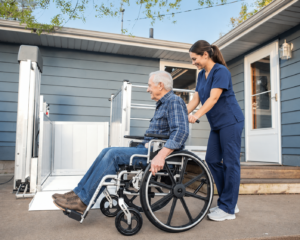
Senior mobility assistance may include steadying support during routine activities, helping with transfers, or making sure mobility equipment is used as intended.
A caregiver should not replace a doctor, nurse, physical therapist, or other qualified professional. When a change in mobility appears concerning, the appropriate healthcare professional should be contacted.
3. They Make Personal Care Less Risky
Bathing and using the bathroom can require balance and careful movement.
A caregiver can provide appropriate assistance with personal care based on the person’s needs and care plan. This can make difficult routines feel less stressful and may reduce the temptation to rush through them.
Simple habits matter. Taking time, keeping needed items nearby, and using recommended safety equipment can make a meaningful difference.
4. They Keep Everyday Spaces More Manageable
A cluttered home can make movement harder.
Light cleaning and organization can help keep floors and walking paths clear. Caregivers may also help with routine household tasks so that an older adult does not have to perform activities that are difficult or unsafe for them.
This is where Light Housekeeping Services in Omaha, NE can fit into a broader home-care plan when those services are appropriate.
The important point is that housekeeping is not only about having a clean home. It can also support a safer environment for daily living.
5. They Help With Meals and Kitchen Tasks
The kitchen contains several potential hazards, including hot surfaces, sharp tools, spills, and hard-to-reach cabinets.
A caregiver can assist with meal preparation and routine kitchen tasks according to the care plan.
For example, instead of asking an older adult to stand on a chair to reach something, a caregiver can help retrieve the item safely.
Small adjustments like this can prevent unnecessary risks.
A Simple CARE Framework for Home Safety
Families can use a simple CARE approach when thinking about daily safety.
C – Clear the path
Remove clutter and unnecessary obstacles from areas used often.
A – Assist where needed
Provide help with activities that have become difficult, such as bathing, dressing, or moving between rooms.
R – Review changes
Pay attention to new difficulties, changes in walking, unusual fatigue, or increased trouble with everyday tasks.
E – Encourage independence
Let seniors complete safe tasks on their own instead of doing everything for them.
This framework keeps the focus balanced. Safety matters, but so does dignity.
Everyday Practices That Support Senior Home Safety
| Practice | When it helps | Simple cue | Common mistake |
| Clear walkways | When rooms feel crowded | Keep paths open | Moving clutter into another walkway |
| Better lighting | During evenings or early mornings | Light frequently used areas | Leaving dark hallways |
| Mobility support | When walking feels difficult | Ask before assisting | Pulling or rushing the person |
| Bathroom support | During bathing or toileting | Keep needed items close | Leaving the person without needed help |
| Safe kitchen routines | During meal preparation | Keep frequently used items within reach | Reaching from chairs or unstable surfaces |
These simple practices are part of broader elderly home safety tips. They work best when they match the person’s abilities and daily routine.
Safety Should Not Mean Taking Away Independence
One common misconception is that keeping an older adult safe means doing everything for them.
In reality, too much help can sometimes make a person feel less capable.
A better approach is to provide support where it is needed while allowing the senior to continue doing safe activities independently.
For example, a caregiver might prepare part of a meal but allow the senior to choose what they want to eat. They might help organize a room without taking over every household task. They might provide support while walking without rushing the person.
This approach respects both safety and independence.
A Realistic Example
Consider an older adult who has started feeling less steady while moving around the house.
At first, the family may notice only small changes. They see the person holding onto furniture while walking or avoiding the stairs. The person may also stop carrying laundry because it feels uncomfortable.
A professional caregiver can notice these patterns during everyday routines.
Instead of assuming what the senior needs, the caregiver can provide appropriate assistance, keep frequently used areas organized, and communicate relevant observations to the family or appropriate healthcare professional.
Over time, the family may gain a clearer picture of where support is useful.
That is one of the practical benefits of in-home care for seniors. Care happens within the person’s normal environment, where everyday challenges are easier to see.
When Should Families Consider Professional Care?
There is no single age when someone suddenly needs a caregiver.
The better question is whether daily activities are becoming harder or less safe.
Families may want to consider professional support when an older adult:
- Struggles with regular household tasks
- Has difficulty moving safely around the home
- Needs help with bathing or personal care
- Frequently leaves tasks unfinished because they are difficult
- Seems less confident doing activities they once handled easily
- Needs regular companionship or supervision
- Would benefit from caregiver assistance for seniors while continuing to live at home
Professional support can also give family members peace of mind when they cannot be present every day.
Common Mistakes Families Should Avoid
1. Waiting for a serious accident
Families sometimes wait until a fall or other emergency happens before making changes.
It is better to pay attention to early warning signs and address reasonable risks before they become bigger concerns.
2. Assuming every senior needs the same help
Older adults have different abilities, preferences, routines, and goals.
A solution that works well for one person may not work for another.
3. Doing everything for the senior
Safety should not automatically mean removing responsibility from the older adult.
Whenever possible, encourage safe participation in everyday activities.
4. Ignoring small changes
A new difficulty with walking, reaching, bathing, or household tasks may deserve attention.
Small changes can help families understand when additional support may be useful.
How Families Can Create a Safer Routine
A practical routine can make caregiving easier for everyone.
1. Observe daily activities.
Look at where the senior struggles rather than relying only on assumptions.
2. Identify the highest-risk tasks.
Focus first on activities involving movement, bathing, stairs, cooking, or reaching.
3. Make simple environmental changes.
Keep pathways clear, improve lighting, and place commonly used items within easy reach.
4. Match support to the person’s needs.
Use caregiver assistance where it provides meaningful help without removing safe independence.
5. Review the routine regularly.
Needs can change over time, so the care plan may need to change too.
This approach supports aging in place safely without treating every part of the home as a potential danger zone.
Frequently Asked Questions
1. What can professional caregivers do to improve senior safety?
Professional caregivers can assist with daily activities, mobility, personal care, meals, and light household tasks. They can also notice potential hazards and communicate important changes to family members or appropriate professionals.
2. How can families improve home safety for elderly people?
Families can keep walkways clear, improve lighting, place frequently used items within easy reach, reduce unnecessary climbing, and arrange appropriate support for activities that have become difficult.
3. When should an older adult consider in-home care?
Consider it when everyday activities become difficult, unsafe, or stressful, especially when the person needs regular assistance but wants to remain at home.
4. Does Concierge Home Care, LLC provide safety-related support?
Concierge Home Care, LLC can be considered when a family is looking for appropriate in-home support for an older adult’s daily needs. Families should discuss their specific needs and the services available before choosing care.
5. How does professional care support independence?
Good caregiving does not mean taking over every task. It provides help where needed while allowing the senior to participate in safe activities and maintain as much control over daily life as possible.
Conclusion
Senior safety at home is not about creating a perfect or risk-free environment. It is about noticing everyday challenges, reducing avoidable hazards, and providing the right level of support.
Professional caregivers can make this easier by assisting with mobility, personal care, meals, household routines, and other daily activities. Just as importantly, they can offer another set of eyes when a senior’s needs begin to change.
For families, the goal is simple: help an older loved one remain comfortable, respected, and as independent as possible while living in a familiar place.
When safety and independence are treated as partners rather than opposites, senior safety at home becomes a practical part of everyday care.