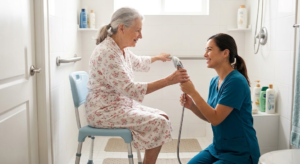
Imagine an older parent standing outside the bathroom, worried about stepping into the shower. The floor feels slippery. Getting in and out takes more effort than it used to. A family member wants to help, but another question comes up: Does the person helping need to be a nurse?
In many situations, a trained non-medical caregiver can provide senior bathing assistance without being a nurse. Bathing help may include practical support with personal hygiene, preparing the bathroom, assisting with clothing, and helping a senior move safely within the caregiver’s training and the agreed care plan.
The key is knowing what a caregiver can safely do and when a nurse or other healthcare professional is needed.
What Is Senior Bathing Assistance?
Senior bathing assistance is non-medical support that helps an older adult maintain personal hygiene while staying as safe, comfortable, and independent as possible at home.
A caregiver’s role is generally focused on daily living support rather than medical treatment or clinical care.
For families, this distinction matters. A caregiver does not need to be a nurse to help with ordinary bathing needs. However, the caregiver should understand the senior’s care plan, follow appropriate safety practices, and stay within the limits of their training.
What Can a Non-Medical Caregiver Help With?
Bathing can involve more than simply washing.
An older adult may need help preparing the bathroom, gathering clean clothes, getting into or out of the bathing area, or maintaining privacy during personal care.
Depending on the senior’s needs and the caregiver’s training, caregiver bathing assistance may include:
- Preparing towels, soap, clean clothing, and other supplies
- Helping the senior prepare for a bath or shower
- Providing support with clothing before and after bathing
- Assisting with washing areas the senior cannot comfortably reach
- Helping with basic personal hygiene
- Offering steady guidance during movement
- Helping the senior dry off and get dressed
- Leaving the bathroom clean and organized afterward
The exact tasks should always depend on the senior’s abilities and the agreed care plan.
The goal is not to take over everything. Good bathing help allows a senior to do as much as possible independently while receiving support where it is needed.
Why Bathing Can Become Difficult With Age
A familiar bathroom can become challenging when strength, balance, flexibility, or confidence changes.
A senior who once stepped into a shower without thinking may eventually hesitate. A bathtub edge can become harder to clear. Bending down may feel uncomfortable. Standing for several minutes may become tiring.
There can also be an emotional side.
Bathing is private. Some older adults may feel embarrassed about needing help with personal hygiene. Others may worry about losing independence.
A respectful caregiver understands this.
Instead of rushing through the task, the caregiver can explain what is happening, protect the senior’s privacy, and encourage independence whenever it is safe.
That simple approach can make bathing feel less like a loss of independence and more like a normal part of receiving help at home.
Caregiver vs. Nurse: What Is the Difference?
The difference is mainly about the type of care being provided.
| Caregiver support | Nursing care |
| Helps with daily personal care | Provides clinical and medical care |
| May assist with bathing and hygiene | May assess or manage medical conditions |
| Can support ordinary daily routines | May provide skilled nursing interventions |
| Works according to training and the care plan | Works within professional nursing scope |
| Focuses on daily living and comfort | Focuses on healthcare needs |
This does not mean one role is more important than the other.
They simply serve different purposes.
A senior who needs help washing, dressing, or maintaining hygiene may need non-medical home care. A senior with complex medical needs may require a qualified healthcare professional.
When the situation falls outside a caregiver’s training, the safest choice is to involve the appropriate professional.
A Simple SAFE Framework for Bathing Help
Families can use four simple ideas when evaluating bathing support.
1. Safety
Look at the bathroom before the bathing routine begins.
The caregiver should know where the senior will sit, stand, enter, and exit. The area should be prepared to reduce unnecessary hazards.
2. Assistance
Identify exactly where help is needed.
One senior may only need help preparing supplies. Another may need more hands-on support with washing or dressing.
The caregiver should provide the level of assistance that fits the care plan.
3. Freedom
Encourage the senior to do safe tasks independently.
If the senior can wash their face, hold a washcloth, or choose their clothing, there may be no reason for the caregiver to take over.
Maintaining independence can be an important part of respectful home care.
4. Escalation
Know when ordinary caregiver support is no longer enough.
If the senior’s needs involve medical concerns, complex mobility issues, unexpected changes, or tasks outside the caregiver’s training, the family should seek appropriate professional guidance.
This framework keeps the focus on the senior rather than simply completing the bathing task as quickly as possible.
A Caregiver Should Not Pretend to Be a Nurse
One common misconception is that a caregiver must perform medical tasks to provide valuable personal care.
That is not true.
A caregiver can be extremely helpful while remaining within a non-medical role.
The caregiver should not present ordinary personal care assistance as nursing care. They should also avoid performing tasks they have not been trained or authorized to perform.
This boundary protects everyone.
For families, it also creates a clearer understanding of what kind of help they are arranging.
What Makes Bathing Assistance Respectful?
Technical safety is only one part of good bathing support.
Dignity matters too.
A senior may feel vulnerable when another person helps with personal hygiene. The caregiver can make the experience more comfortable through simple actions.
For example, the caregiver can explain each step before providing assistance. They can give the senior reasonable choices. They can protect privacy whenever possible.
A caregiver might say, “Would you like to wash your hair first or your arms?”
That small choice gives the senior a sense of control.
The caregiver can also avoid unnecessary conversation about private care needs. Respectful language and a calm approach can make a major difference.
Common Mistakes Families Should Avoid
Treating every senior the same
Every person’s abilities are different. Bathing assistance should be based on individual needs rather than a standard routine.
Rushing the senior
Moving quickly can make an older adult feel anxious. A calm pace allows the senior to participate safely where possible.
Assuming a caregiver can handle every situation
A caregiver should work within their training and care plan. More complex needs may require professional healthcare support.
Ignoring the senior’s preferences
Privacy, timing, temperature preferences, and personal routines can all affect comfort.
Focusing only on physical safety
Safety matters, but dignity matters too. A bathing routine should protect both.
How Families Can Arrange Bathing Help at Home
Families often begin by identifying exactly what the senior struggles with.
Perhaps the senior can bathe independently but needs help preparing the bathroom. Maybe they need assistance with washing hard-to-reach areas. They might need support getting dressed afterward.
Writing down these needs can make conversations with a home care provider much easier.
A family can then discuss:
- The senior’s daily abilities
- The type of bathing assistance needed
- Mobility and bathroom concerns
- The caregiver’s training and responsibilities
- The expected schedule and care plan
- When healthcare professionals should become involved
This approach helps families choose support based on actual needs rather than assumptions.
What About Seniors Who Use Mobility Equipment?
Mobility equipment can change the way bathing assistance is provided.
A senior may use a shower chair, grab bars, walker, wheelchair, or another support device. The caregiver should understand how the equipment is intended to be used and should not improvise with equipment they are not trained to handle.
Families should also communicate any relevant instructions that affect the bathing routine.
If transferring the senior requires specialized assistance, the family should make sure the person providing that help has the appropriate training.
The safest plan is one that matches the senior’s abilities, equipment, and care needs.
When Might a Nurse Be Needed?
A caregiver may be appropriate for routine non-medical bathing help, but some situations call for professional healthcare support.
A nurse or other appropriate healthcare professional may be needed when the senior has complex medical needs or requires clinical assessment or treatment.
Families should pay particular attention when a senior’s condition changes unexpectedly or when the requested task goes beyond ordinary personal care.
The important question is not simply, “Is the caregiver a nurse?”
A better question is, “Does this senior’s current need require medical care or non-medical daily support?”
That distinction can help families choose the right type of assistance.
How Personal Care Can Support Aging at Home
For many families, bathing is only one part of a larger daily routine.
An older adult may also need help with dressing, hygiene, laundry, light housekeeping, shopping, or other everyday activities.
Personal care services Omaha NE can provide non-medical support designed around daily living needs. The purpose is to help seniors remain comfortable at home while allowing family members to feel more confident about their loved one’s routine.
The right level of help can also change over time.
A senior might need only occasional assistance today and require more support later. Regular communication with the family and care provider can help keep the care plan aligned with those changing needs.
Summary
A caregiver does not necessarily need to be a nurse to help a senior with bathing.
Non-medical caregivers can often provide practical assistance with personal hygiene and daily bathing routines when those tasks fit their training and the senior’s care plan.
The most important principles are safety, appropriate assistance, independence, and knowing when professional healthcare support is needed.
Bathing should never be treated as just another household task. For an older adult, it can involve privacy, confidence, mobility, and dignity.
When families choose the right type of support, a simple bathing routine can become a safer and more comfortable part of aging at home.
FAQ
Can a caregiver help a senior bathe without being a nurse?
Yes. A trained non-medical caregiver may provide bathing and personal hygiene assistance when the tasks fit their training, role, and the senior’s care plan.
What bathing tasks can a caregiver provide?
Depending on training and the care plan, a caregiver may help with preparation, clothing, washing, drying, basic hygiene, and other routine personal care tasks.
When does a senior need a nurse instead?
A healthcare professional may be appropriate when the senior needs clinical assessment, medical treatment, or care that goes beyond routine non-medical personal assistance.
How can families make bathing safer for an older adult?
Families can identify the senior’s specific needs, prepare the bathroom, use appropriate equipment, follow the care plan, and ensure the caregiver understands their responsibilities.
Does Concierge Home Care, LLC provide bathing and personal care assistance?
Families in Omaha can contact the agency to discuss available in-home personal care support, the senior’s needs, caregiver responsibilities, and an appropriate care plan.