A senior may still want to do everything independently, even when getting from the bedroom to the kitchen has become difficult. A slow walk, a difficult transfer, or a struggle to step into the shower can turn ordinary routines into stressful moments.
A caregiver for seniors with limited mobility can make those moments safer and easier. The goal is not to take away independence. It is to provide the right amount of support so a senior can continue doing as much as possible.
Caregiver mobility assistance may include helping with transfers, walking, personal care, household tasks, mobility devices, and safer movement around the home. It can also give family members greater confidence that their loved one has appropriate support.
What Can a Caregiver Do for a Senior With Limited Mobility?
A caregiver can help a senior move safely, complete daily routines, reduce common household hazards, and stay involved in meaningful activities.
The exact support depends on the senior’s abilities and care plan. Some seniors may need only standby assistance. Others may need hands-on help with transfers, personal care, or household activities.
The most helpful approach is to support independence rather than automatically doing everything for the senior.
1. Help With Getting Up and Moving Around
Simple movements can become challenging when balance, strength, or flexibility is limited.
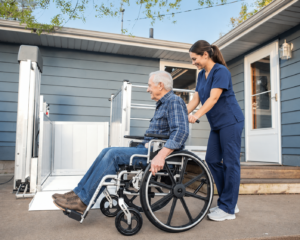
A caregiver may provide support when a senior gets out of bed, rises from a chair, walks to another room, or moves between common areas of the home.
The caregiver should encourage the senior to move at a comfortable pace rather than rushing through the task.
For example, a morning routine might involve:
- Helping the senior sit safely at the edge of the bed.
- Allowing time to become steady before standing.
- Providing appropriate support while walking.
- Helping the senior reach a chair or another safe destination.
- Keeping frequently used items within easy reach.
This type of senior mobility assistance can make everyday movement feel less overwhelming.
2. Provide Safe Transfer Assistance
Transfers are movements between two positions or surfaces. Examples include moving from a bed to a wheelchair or from a chair to a standing position.
These movements require care because an unstable transfer can lead to a fall or injury.
A caregiver can provide senior transfer assistance according to the senior’s care plan and training. When a mobility device or transfer equipment is involved, it should be used correctly.
For seniors who require more specialized support, Hoyer lift assistance for seniors may be part of an appropriate care plan. A caregiver should only operate equipment when properly trained and when its use is appropriate for the senior.
The key principle is simple: transfers should never be rushed.
3. Support the Safe Use of Mobility Devices
Canes, walkers, and wheelchairs can help seniors move around more safely. However, simply having a mobility aid does not guarantee that it is being used correctly.
A caregiver can help a senior use an approved mobility device as directed. The caregiver can also make sure the pathway is clear and that the device is available when needed.
Professional guidance may be important when a senior needs a new mobility device or changes in mobility support. A healthcare professional can help determine whether a particular device is appropriate and properly fitted.
A caregiver’s role is often to support safe use rather than decide which medical or mobility device a senior needs.
4. Make the Home Easier and Safer to Navigate
The home itself can either support mobility or make movement harder.
Loose rugs, clutter, poorly placed furniture, cords, and items stored too high can create unnecessary obstacles. Bathrooms can also require extra attention because movement may become harder around wet surfaces.
Simple changes may include:
- Keeping walking paths clear.
- Moving commonly used items to reachable locations.
- Removing or securing loose rugs.
- Improving lighting in important areas.
- Keeping cords organized.
- Making frequently used rooms easier to navigate.
- Using appropriate grab bars or other safety equipment when recommended.
These steps support fall prevention for seniors and can make daily movement less stressful.
5. Help With Personal Care
Limited mobility can make personal care surprisingly difficult.
A senior may struggle to step into a shower, stand long enough to bathe, get dressed, use the restroom, or complete grooming tasks.
A caregiver can provide respectful assistance with personal routines when those services are included in the care plan.
The goal should always be dignity.
A caregiver might place needed items within reach, offer support during movement, assist with dressing, or provide personal hygiene assistance. The senior should be encouraged to complete any part of the routine they can safely manage independently.
That balance matters. Too little help can create unnecessary risk. Too much help can make a senior feel that independence is being taken away.
6. Help With Household Tasks That Require Too Much Physical Effort
Mobility limitations do not only affect walking.
A senior may have difficulty carrying laundry, bending to clean, changing bed linens, preparing food, or shopping for groceries.
Caregiver support can reduce the physical burden of these tasks.
For example, a caregiver may help with:
- Light housekeeping
- Laundry
- Grocery shopping
- Household organization
- Carrying necessary items
- Basic meal-related tasks
These services can allow a senior to conserve energy for activities that matter more to them.
Home care resources commonly identify household assistance, grocery support, personal care, and errands as practical ways caregivers can help seniors with limited mobility remain at home.
7. Encourage Safe Activity
Limited mobility does not always mean a senior should remain inactive.
Depending on the senior’s health and professional guidance, safe movement may include walking, gentle exercises, chair-based activities, or other appropriate routines.
A caregiver can encourage a senior to follow activities recommended by qualified professionals. They can also provide companionship and practical support during appropriate activities.
Exercise should not be improvised when a senior has significant mobility limitations. A healthcare professional can help determine what activities are suitable.
The goal is not to push a senior beyond their ability. It is to encourage safe movement within appropriate limits.
8. Reduce Isolation and Build Confidence
Mobility problems can affect more than physical movement.
When leaving the house becomes difficult, a senior may participate less in family activities, hobbies, shopping, appointments, or social visits.
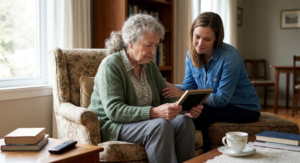
A caregiver can provide companionship and encouragement. They may help a senior participate in safe daily activities, spend time with others, or complete errands.
That social connection can make daily life feel more normal.
Support with transportation or errands may also help a senior remain connected to the community when driving or navigating public spaces is no longer practical.
A Simple Framework for Supporting Mobility
A useful way to think about elderly mobility support at home is the SAFE approach:
| Practice | When it helps | Simple cue | Common mistake |
| Support | During walking or transfers | Stay nearby and follow the care plan | Pulling or rushing the senior |
| Adjust | When the home creates obstacles | Clear paths and improve access | Waiting for an accident |
| Facilitate | During daily routines | Let the senior do what they safely can | Doing everything for them |
| Encourage | When confidence is low | Give calm, respectful encouragement | Treating the senior as helpless |
This approach keeps mobility support focused on safety while protecting dignity and independence.
Common Mistakes Families Should Avoid
Supporting a senior with limited mobility requires patience. Several well-intended actions can create problems.
Rushing movement
A caregiver may feel pressure to move quickly. But rushing can make a difficult transfer or walk less safe.
Doing everything for the senior
Complete dependence should not be the goal when a senior can safely participate.
If a senior can dress independently but needs help standing, the caregiver can support standing without taking over the entire task.
Ignoring the home environment
Mobility assistance is not only about the person. The surroundings matter too.
A clear path can make movement easier. A cluttered path can make the same movement more difficult.
Using equipment without proper guidance
Walkers, wheelchairs, and transfer equipment should be used appropriately. Caregivers should follow the senior’s care plan and professional instructions.
Forgetting dignity
Personal care and mobility assistance can feel sensitive. Calm communication and respect can make a major difference.
When Should a Family Consider Additional Home Care Support?
Families may want to explore additional support when mobility challenges begin affecting everyday routines.
Possible signs include increasing difficulty getting out of chairs, trouble walking safely through the home, difficulty with bathing or dressing, repeated struggles with household tasks, or a growing need for assistance with transfers.
A caregiver can help with daily routines, but significant changes in mobility may require professional assessment.
If a senior suddenly becomes much less mobile, experiences a fall, develops new weakness, or has another significant change in physical function, the family should seek appropriate medical guidance.
How Non-Medical Home Care Can Support Limited Mobility
Non-medical home care for seniors in Omaha can provide practical assistance with everyday activities while allowing seniors to remain in familiar surroundings.
Depending on the care plan, support may include mobility assistance, personal care, Hoyer lift assistance, light housekeeping, laundry, and grocery shopping.
The purpose is not to replace medical care. Instead, non-medical support can help with daily activities that have become difficult because of limited mobility.
For families, this can also provide another layer of support when they cannot be present for every routine.
Conclusion
A senior with limited mobility may not need someone to take over every part of daily life. Often, the most valuable support is the right assistance at the right moment.
A caregiver can help with walking, transfers, mobility devices, personal care, household tasks, errands, and safer movement around the home. Just as importantly, a caregiver can encourage a senior to remain involved in decisions and activities whenever it is safe to do so.
The best caregiver for seniors with limited mobility supports safety without unnecessarily limiting independence.
With thoughtful assistance, a familiar home environment can remain a place where seniors move with greater confidence, maintain dignity, and continue participating in everyday life.
FAQ
Can a caregiver help a senior with limited mobility walk at home?
Yes. A caregiver may provide appropriate walking support and standby assistance according to the senior’s care plan and abilities.
Can a caregiver help with transfers?
Yes. Caregivers may assist with transfers when the task is within their training and the senior’s care plan. Specialized equipment requires proper training.
Can a caregiver help a senior use a Hoyer lift?
A trained caregiver may provide Hoyer lift assistance when it is included in the care plan. The equipment should be used according to proper instructions.
What services can help seniors with mobility problems?
Support may include mobility assistance, personal care, light housekeeping, laundry, grocery shopping, errands, and other approved daily activities.
Can Concierge Home Care, LLC help seniors with limited mobility in Omaha?
Yes. Concierge Home Care, LLC provides non-medical home care support for seniors, including practical assistance with daily activities and mobility-related needs. Families can call 402-650-3818 or email [email protected] to learn more.