A daughter notices that her father is having trouble keeping up with laundry, meals, and basic household tasks. At the same time, his doctor says he needs skilled care while recovering from an illness.
The family starts searching for help and quickly runs into two terms: home care and home health care. They sound almost identical, but they serve different purposes.
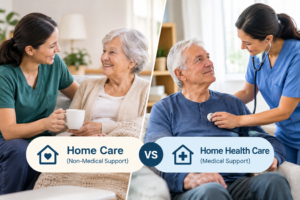
Understanding home care vs home health care can help families choose the right type of support without confusion. The simple difference is this: home care focuses on daily living and personal support, while home health care focuses on skilled medical services provided at home.
Key Takeaways
- Home care provides non-medical help with everyday activities and personal needs.
- Home health care provides skilled medical services, such as nursing and therapy.
- A person may need one type of care or both at different times.
- Families should match the service to the person’s actual needs, not simply the name of the service.
What Is the Difference Between Home Care and Home Health Care?
The difference between home care and home health care mainly comes down to the type of support being provided.
Home care helps a person manage everyday life at home. This may include help with personal routines, household tasks, meals, companionship, and other daily activities.
Home health care provides skilled medical care at home. Depending on the care plan, this can include nursing, physical therapy, occupational therapy, speech therapy, wound care, and other skilled services.
In simple terms:
Home care helps with daily living. Home health care helps with medical needs.
What Does Home Care Provide?
Non-medical home care is designed to help people remain comfortable and supported in their own homes.
For an older adult, everyday tasks can become difficult even when medical treatment is not needed. A caregiver may help with laundry, light housekeeping, shopping, meals, personal routines, or other daily needs.
These services can provide practical support while also giving family caregivers more peace of mind.
For example, an older adult may still be able to live safely at home but struggle to carry a basket of laundry downstairs. Another person may find grocery shopping difficult because of limited strength or mobility.
These situations may call for home care services, rather than skilled medical treatment.
Common Home Care Services
Non-medical support may include:
- Companionship
- Medication reminders, when permitted by the care arrangement
- Assistance with other activities of daily living
The exact services vary between providers. Families should always confirm what an agency can and cannot provide before starting care.
What Does Home Health Care Provide?
Home health care focuses on skilled medical services provided in a person’s home.
A person may receive home health care after an illness, injury, surgery, or other health change that requires professional medical attention. Services may include skilled nursing, physical therapy, occupational therapy, speech therapy, wound care, and other skilled services.
For example, someone recovering from surgery may need a qualified professional to provide wound care or physical therapy at home.
That is different from having a caregiver help with laundry, light housekeeping, shopping, or other everyday tasks.
Important: Home health care and non-medical home care serve different purposes. The right option depends on the person’s needs, and medical concerns should be discussed with a qualified healthcare professional.
Home Care vs Home Health Care at a Glance
| Area | Home Care | Home Health Care |
| Main purpose | Daily living support | Skilled medical care |
| Type of care | Non-medical | Medical or skilled |
| Typical support | Housekeeping, laundry, personal support, shopping | Nursing, therapy, wound care and other skilled services |
| Care team | Professional caregivers and family members | Nurses, therapists and other qualified professionals |
| Medical treatment | Not the main service | Central to the service |
| Doctor’s involvement | Generally not required for non-medical support | Often required for an ordered care plan |
| Length of support | Based on needs and arrangements | Based on medical needs and eligibility |
| Payment | Often private pay or applicable benefits | May be covered by Medicare, Medicaid or insurance when requirements are met |
The table provides a general guide. Services, eligibility, and payment rules can vary by situation and provider.
When Does a Senior Need Home Care?
Home care may be appropriate when an older adult needs help managing everyday life but does not need skilled medical treatment.
Some common signs include difficulty keeping up with household chores, preparing meals, shopping, laundry, or personal routines.
Consider a senior who lives alone and still manages most activities independently. Their biggest challenge may be keeping the home clean and getting groceries.
That person may benefit from daily living assistance without needing skilled nursing.
Another senior may need more regular help with personal care. Support with bathing, grooming, dressing, or other routines may help them remain at home more comfortably.
The important question is not simply, “Does this person need care?”
A better question is, “What type of care does this person actually need?”
Can Home Care and Home Health Care Work Together?
Yes. In some situations, a person may benefit from both types of support because they address different needs.
For example, an older adult recovering from surgery may receive home health care for skilled treatment or therapy. At the same time, a caregiver may help with meals, laundry, light housekeeping, shopping, or daily routines.
The two services can work alongside each other when a person has both medical and everyday care needs. Home health care addresses skilled medical needs, while non-medical home care helps with daily living and household tasks.
The key is understanding what each type of care can provide and making sure the person receives the right support for their needs.
A Simple Framework for Choosing the Right Care
Families can use four simple steps when comparing care options.
1. Identify the Daily Challenges
Write down the tasks that have become difficult.
Is the person struggling with laundry, shopping, housekeeping, personal routines, or meals?
These needs may point toward non-medical home care.
2. Identify the Medical Needs
Next, consider whether the person needs nursing, therapy, wound care, or another skilled medical service.
If so, the family should discuss those needs with a healthcare professional.
3. Separate Support From Treatment
Ask whether the person needs someone to help with life at home or someone to provide medical treatment.
This simple distinction can prevent many misunderstandings.
4. Confirm the Provider’s Services
Before hiring an agency, ask exactly what caregivers can do.
Families should also ask about caregiver qualifications, scheduling, care plans, costs, and what happens if needs change.
Common Mistakes Families Should Avoid
Families can avoid confusion by watching for these common mistakes:
- Assuming home care and home health care are the same
They serve different purposes. Home care focuses on daily living support, while home health care provides skilled medical services. - Choosing a service based only on its name
Families should review the actual services offered and compare them with the senior’s needs. - Expecting a non-medical caregiver to provide medical treatment
Non-medical caregivers should not be expected to replace nurses, therapists, or other healthcare professionals. - Waiting until a crisis occurs
Starting the care conversation early gives families more time to understand their options and plan the right support.
How Can Families Choose the Right Support?
Choosing between home care and home health care does not have to feel overwhelming.
A practical starting point is to make a simple list of what the senior needs help with each day.
If the list mostly includes household tasks, personal routines, companionship, or other daily activities, non-medical home care may be worth exploring.
If the list includes skilled nursing or therapy, the family should speak with the appropriate healthcare professional about home health care.
In some cases, both may be useful.
For families researching Omaha home care services, the same principle applies. The best option is not necessarily the provider with the longest service list. It is the provider whose services match the person’s needs and expectations.
FAQ
Is home care the same as home health care?
No. Home care generally provides non-medical help with daily living, while home health care provides skilled medical services at home.
Does home health care include help with daily activities?
It can, but daily activity support may be provided as part of a skilled home health plan. The main focus remains medical or skilled care.
Can seniors receive home care for long-term support?
Non-medical home care can be arranged according to a person’s needs and care plan. The length and schedule depend on the individual and provider arrangement.
Does Medicare pay for home health care?
Medicare may cover certain home health services when specific eligibility and coverage requirements are met. Families should review current Medicare rules and discuss eligibility with the healthcare team.
What non-medical home care is available in Omaha?
Families looking for non-medical home care Omaha NE can explore services that support daily living. Concierge Home Care, LLC offers support including light housekeeping, laundry, grocery and shopping assistance, Hoyer lift assistance, and personal hygiene support.